The state of AI CAD in 2026, from inside GrandpaCAD
I started GrandpaCAD in April 2025 for one reason: my grandpa loves 3D printing and hates modeling software. He wanted to make things, not learn where the extrude button went. Eighteen months later the question I get most often is still the same one: can AI actually do CAD yet, or is it a demo?
This is my honest answer, written from the inside. I run a 3D generation product every day, I benchmark every frontier model against it, and I read every failed generation. Here's what works, what doesn't, and what changed since I last wrote this post (October 2025, when I said GrandpaCAD could do "maybe 1% of CAD").
AI CAD is two different problems
Almost every argument about "AI CAD" mixes up two things that have nothing to do with each other.
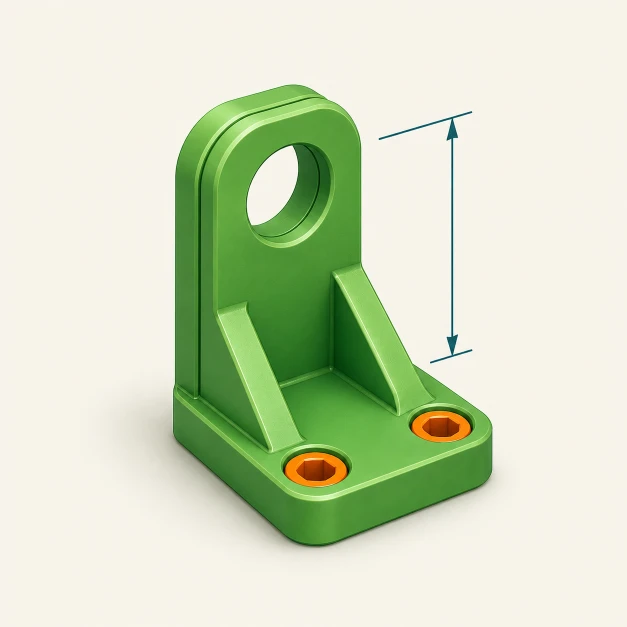
The first is dimensional parts: brackets, enclosures, flanges, threaded jars, anything where 40 mm has to be 40 mm and a hole has to line up with the hole on the other part. Here the AI doesn't model anything. It writes code (OpenSCAD, CadQuery, build123d, Blender Python) and a CAD kernel compiles it into geometry. The language model is the engineer, the kernel is the ruler.
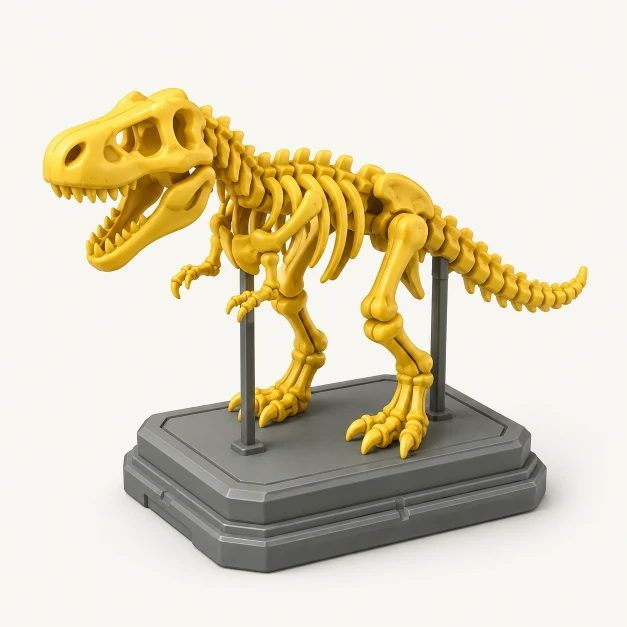
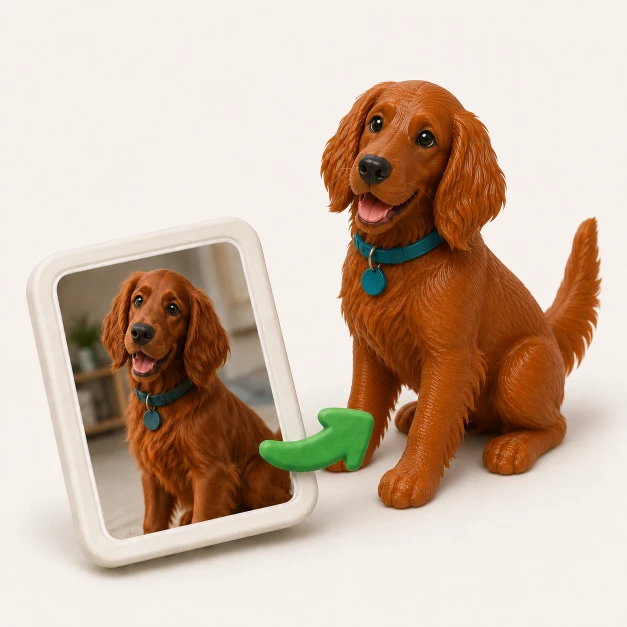
The second is organic shapes: figurines, busts, animals, anything you'd describe by how it looks rather than by its measurements. No amount of code gets you a convincing dog. These come from a different family of models entirely: an image is generated or supplied, and a reconstruction model turns it into a mesh.
The tools in this space usually pick one. Zoo does text-to-CAD on a proper kernel, Sloyd and the image-to-mesh services do game-style assets. GrandpaCAD does both, in one chat, and since September 2026 the agent can fuse them: a sculpted dog head on a parametric bottle stopper, where the thread is exact and the dog is a dog.
What works today, with numbers
I don't trust my own impressions of this, so I measure it. Every change to the agent runs through a suite of 23 scenarios: one-shot parts, multi-turn edits, parameter changes, and a couple of organic prompts, replayed through the real chat agent with the real CAD tools. Each generation is checked deterministically (did a file come out, under what cost and time, with how many code errors) and then graded by me by hand. The methodology post has the details, and every run is public on the evals page.
The current default model is GPT-6.1 Sol. On the latest run it produced a usable model in all 23 scenarios, passed 91 of 106 deterministic checks, wrote code that errored once across the whole suite, and I scored its adherence at 0.75 on a 0 to 1 scale. Average cost per finished model was about $0.13 and average time about 100 seconds.
| What you ask for | How it goes in 2026 |
|---|
| A part with dimensions ("a 100 mm flange with six 10 mm holes on a 70 mm circle") | Reliable. This is the bread and butter, and every measurement comes back as a slider you can tune without spending a generation. |
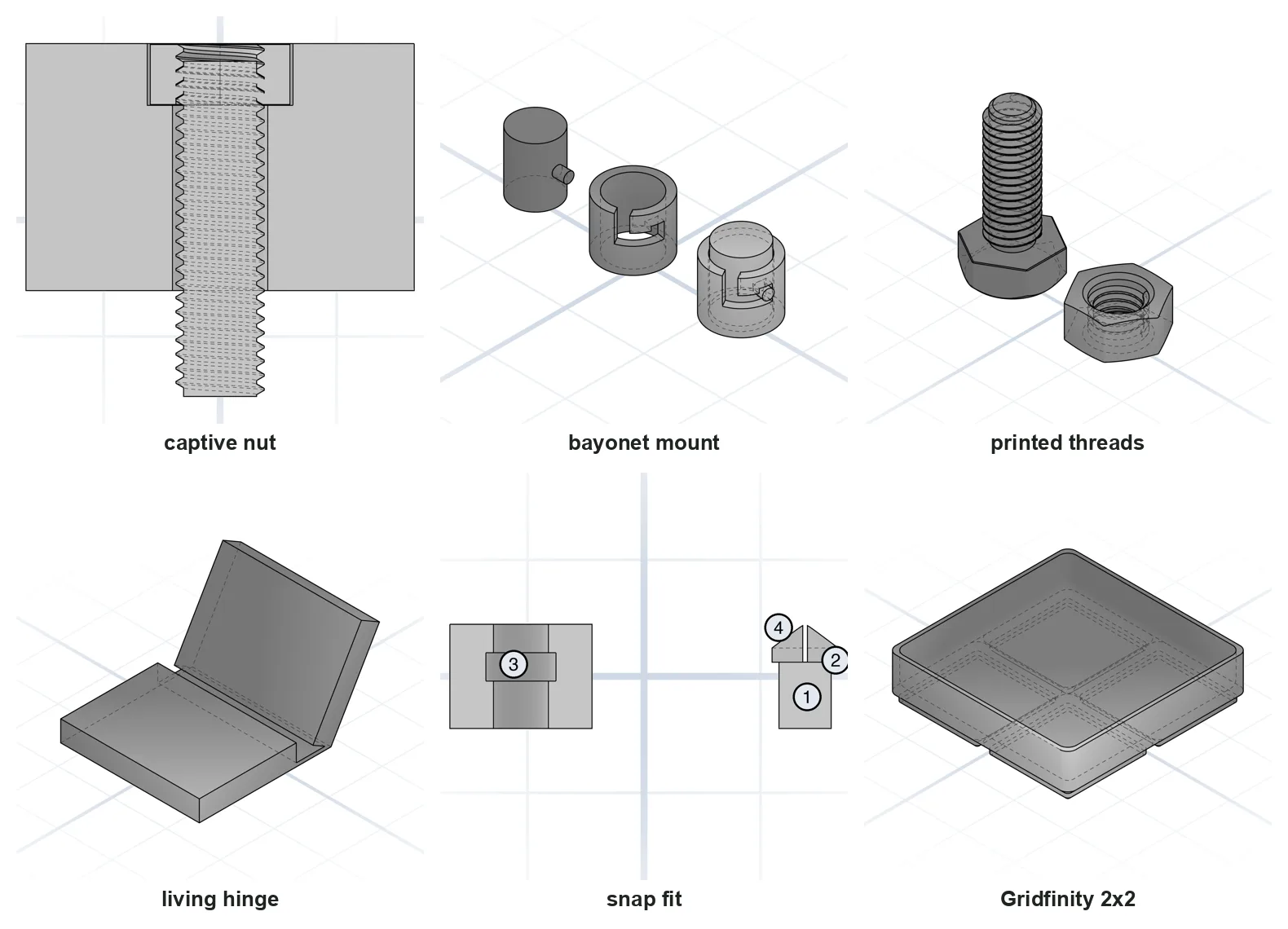
| Hardware ("captive M4 nut", "heat-set insert", "2020 extrusion slot", "GT2 pulley") | Reliable. The agent loads an authoring library per engine (NopSCADlib screws, nuts, inserts, steppers and PCBs, BOSL2 threads and gears) and the cheatsheet is the human-readable catalogue of what you can ask for. |
| Fits and tolerances ("press fit for an 8 mm bearing") | Good, with the usual caveat that your printer decides the last 0.1 mm. Ask for a clearance and it uses the standard ones. |
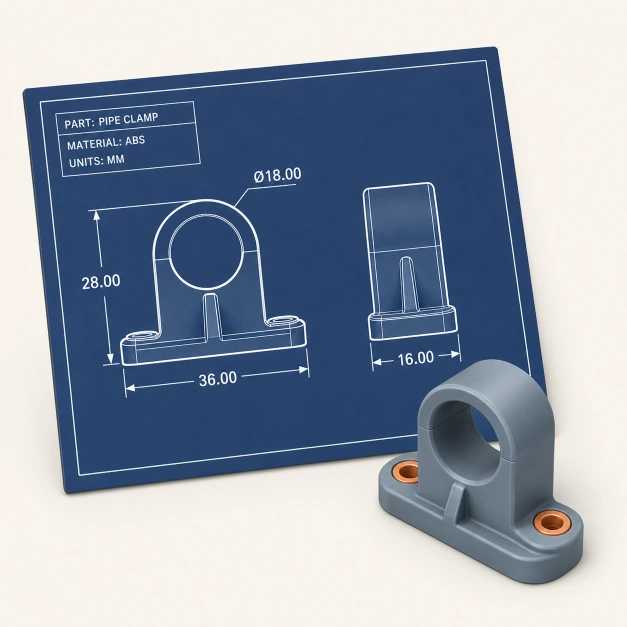
| From a photo, sketch or drawing | Good for drawings and dimensioned sketches, which become parametric parts. Photos of objects become sculpted meshes. More in image to 3D model. |
| Figurines, animals, busts | Much better than a year ago. About 8 in 10 sculpted models slice without repair, up from about 4 in 10 before the September 2026 engine. Multi-color comes out already split for an AMS. |
| Multi-turn edits ("now add a lid", "make the walls 2 mm thicker") | Good. The agent keeps the parameters and the code of the previous step and changes only what you asked. |
| Rigging and animation | Alpha. Works on characters generated in a T or A pose; bones have generic names. |
The thing I'd underline: "reliable" above means reliable on the first try most of the time, and on the second try nearly always. The 2.0 agent renders the part and looks at it from several angles before it hands you the file, and it fixes what it sees. That one change moved more scenarios from "almost" to "yes" than any model upgrade did.
What still breaks
I'd rather you hear this from me than find out after three generations.
Vague prompts get literal parts. GPT-6.1 Sol builds far more complex assemblies than anything we ran before, but "a cool desk organizer" comes back as a box with dividers. Say what you want. The switch post has before-and-after prompts.
Spatial reasoning over many turns is the weak spot. The scenario the models fail most often is a phone stand refined across four messages. Each step is fine; the combination drifts. If a part has gone wrong twice, start a new chat with the full description instead of patching.
Sculpted meshes have no sharp edges. The organic engine works on a voxel field, so a corner rounds to about 0.3 mm on a 100 mm part. That's invisible on a figurine and wrong on a bracket, which is why the agent refuses to sculpt a bracket.
You get a mesh, not a feature tree. GrandpaCAD exports 3MF, STL, OBJ and GLB. The parameters stay editable inside GrandpaCAD, but you can't open the result in Fusion or FreeCAD and edit the sketch that made it. If your job needs STEP files and a drawing office, this is not your tool yet, and Zoo is closer to that.
Rigs are generic. Bones are bone_0, bone_1, no fingers, no face. Retargeting to Mixamo is manual.
How the engine got here
The engine under the chat changed four times, and each change was decided by the eval suite, not by taste.
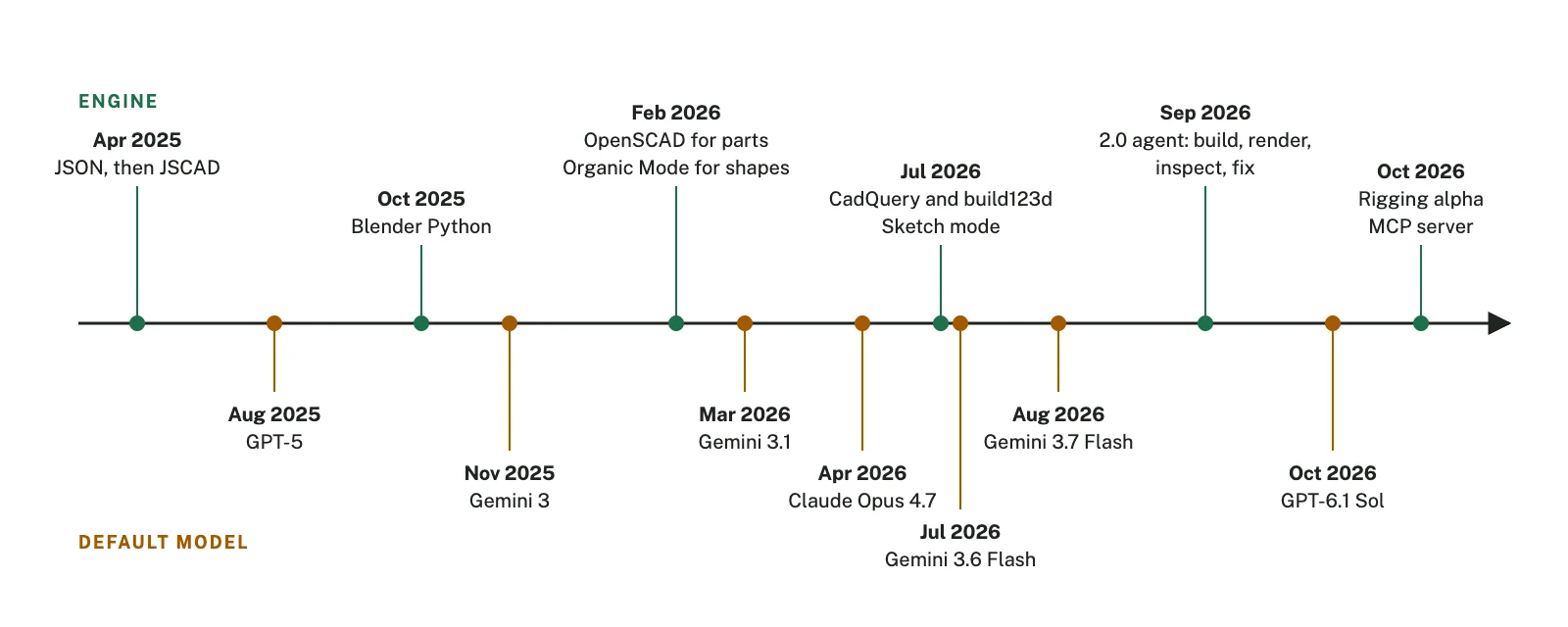
- April 2025. A JSON schema of primitives, then JSCAD in the browser. Enough for a birdhouse and a name tag.
- October 2025. Blender Python as the backend. Booleans and modifiers that didn't fall over.
- February 2026. OpenSCAD for parts, because the models write it with fewer errors than anything else, plus Organic Mode for the shapes code can't do.
- July 2026. I tested CadQuery and build123d, the "serious" kernels everyone told me to use. OpenSCAD stayed the default; the B-rep engines are there for when a fillet has to be a real fillet. Sketch mode arrived the same month.
- September 2026. The 2.0 agent: plan, pick an engine, build, render, inspect, fix. Every model is prepared for where it's going: printer, game engine or renderer.
- October 2026. Auto rigging and animation in alpha, and GrandpaCAD as an MCP server, so ChatGPT, Claude and Cursor can build models through it.
The default language model changed just as often: GPT-5, then Gemini 3, Gemini 3.1, Opus 4.7, Gemini 3.6 Flash, Gemini 3.7 Flash, and now GPT-6.1 Sol. Each switch was a benchmark result, and the benchmark disagreed with the public leaderboards every single time.
Who this is for, revised
In 2025 I wrote that GrandpaCAD was for absolute beginners and nobody else. That was true then. It's narrower than the truth now.
It's for people with a printer who want a specific part and don't want to learn CAD to get it. That's still the core, and still my grandpa. It's for people who have a printer and want a figurine of their dog in three colors. Since September it's also for people making game props and render assets, which I did not plan for and which turned out to use the same engine.
It's not for the mechanical engineer who needs STEP, GD&T and a revision history. Those people know it, and I'd rather say so than waste their free generations.
Where this goes
The model under the hood gets replaced every two or three months and every replacement has made the product better for free. I'd expect that to continue. What I'm working on myself is the part the models can't fix: the agent looking at its own output harder, the organic engine keeping edges, and the cheatsheet growing with every part people ask for that it didn't know.
The replicator in my grandpa's workshop is still the goal. In 2025 I said "basic versions in 5 to 10 years". I'll leave that number alone, but the first half of it, describing a thing and holding it an hour later, is what I do most evenings now.